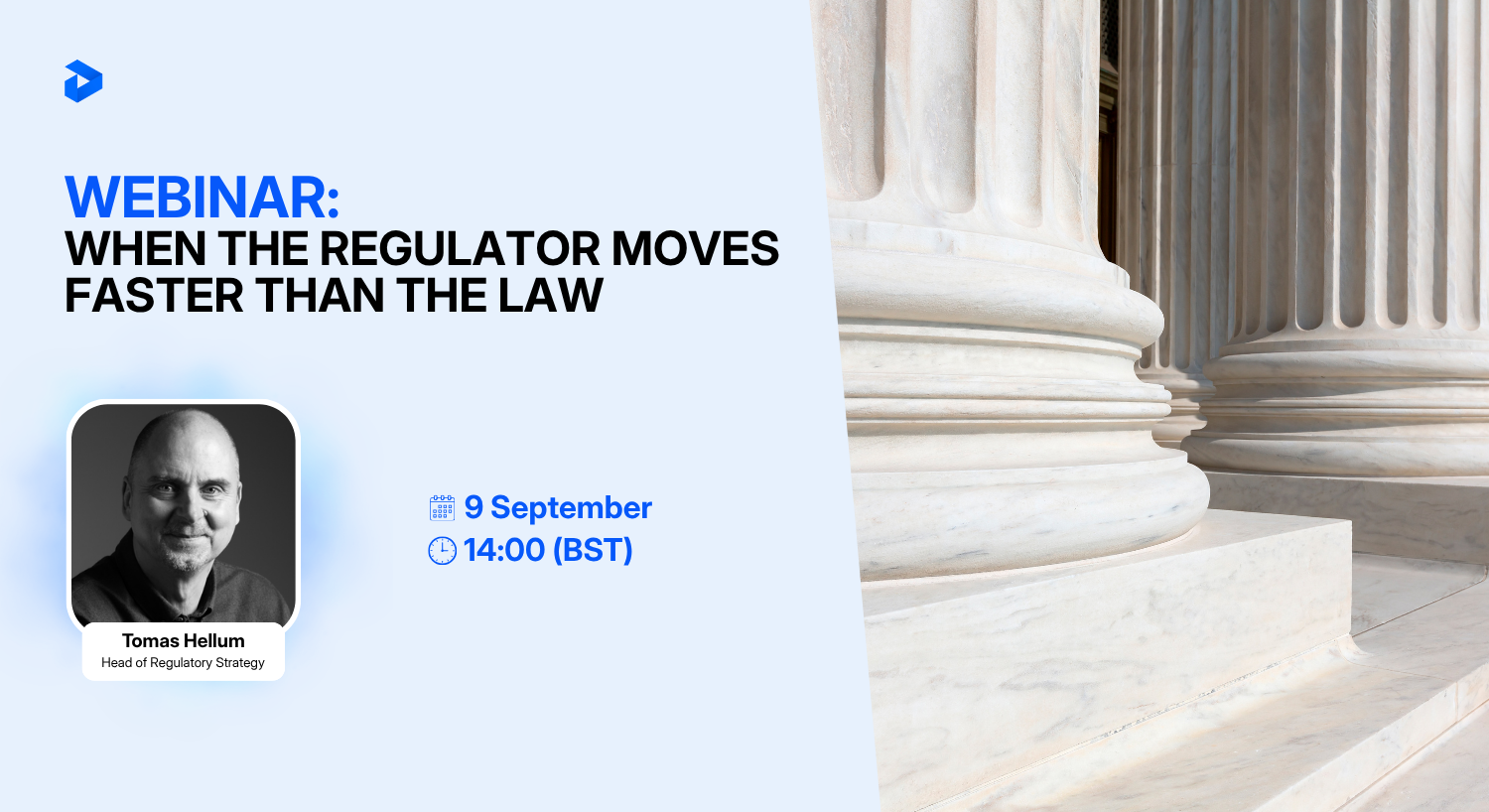
When the regulator moves faster than the law
For 30 years, compliance has been a photograph: posed, framed, true for one day. In 2026, that stopped working. Supervisors now ask for evidence that your controls are working today, generated by the controls themselves, not a binder signed off last quarter.
Agentic AI is now making decisions inside regulated processes, and supervisors have made clear that annual attestations cannot keep pace with systems that change their own behaviour week to week.
Join Tomas Hellum, Head of Regulatory Strategy at Decision Focus as he walks through this important topic.
In 45 minutes
- Why the annual snapshot broke in 2026
What changed in supervisory expectations, and why the old evidence cycle stopped being enough
- The new AI risk classes, and human-on-the-loop oversight
Where agentic systems introduce risk that traditional model risk frameworks were not built to catch
- The week the supervisors moved first: BoE, ESRB, ECB
What each regulator signalled, and what it means for firms operating across jurisdictions
- From snapshot to signal: mapped, generated, owned, alive
The four qualities supervisors now expect from your evidence, and how to build them into existing controls
- Running two clocks: UK judgement, EU codification
Why UK and EU approaches are diverging, and how to satisfy both without duplicating effort
- What to do Monday morning
A practical starting checklist for the week after the webinar
Why now
New risk classes, old frameworks
Agentic systems act, not just predict. Human-on-the-loop oversight has to be designed in from the start, not added after deployment
Regulators moved first
The Bank of England, ESRB and ECB have each signalled how they expect continuous oversight of AI-driven processes, ahead of formal rules catching up
Two clocks, one control set
UK supervisory judgement and EU codification are advancing at different speeds. Firms operating across both need evidence that satisfies each without duplicating the work