Moving beyond legacy GRC software

The stakes of standing still
Ask any risk or compliance leader how much of the working week disappears into administration rather than assurance, and the answer is rarely small. Chasing the latest version of a spreadsheet. Re-entering the same data into three separate systems. Explaining to an auditor why one register does notmatch another. None of this is risk management. It is the overhead of tools that were never built for the scale they are now being asked to support.
Every governance, risk, and compliance (GRC) team eventually reaches the same point. The systems and spreadsheets that once felt adequate start working against the people who rely on them. The question stops being whether to change, and starts being when, and to what.
Why legacy tools survive longer than they should
Few organisations set out to run their GRC programme on outdated software or a network of spreadsheets. It happens gradually. A spread sheet built to solve one problem becomes the template for the next. A point solution bought to satisfy a single regulation never gets replaced once that regulation is handled. Years later, the organisation is holding together a patchwork of tools, each one familiar, none of them built to work with the others.
Familiarity is part of the problem. A tool that everyone already knows how to use, however inefficient, feels safer than a migration project with an uncertain timeline. The result is that many organisations continue paying the ongoing cost of a legacy system to avoid the one-off cost of moving away from it, without ever comparing the two directly.
What legacy tools and spreadsheets actually cost you
Legacy GRC software and spreadsheet-based processes rarely fail all at once. They fail gradually, in ways that are easy to absorb individually andeasy to underestimate collectively.
- Data lives in silos, with riskregisters, policy libraries, audit findings, and compliance evidence held inseparate systems or files, each with its own version history and its own owner
- Reporting is manual, so building a board pack or a regulatory return means exporting, reconciling, and reformatting data by hand every time it is needed
- Audit trails are incomplete, because a spreadsheet edited outside a controlled system leaves no reliable record of who changed what, or why
- Configuration requires a project, since rigid point solutions mean adapting a workflow to a new regulation or business unit becomes a development request rather than asame-day change
- Assurance depends on individuals rather than the system, so when the knowledge of how a spreadsheet works lives in a single person's head, that person becomes a single point off ai lure
None of this reflects the people managing these tools. It reflects what the tools were designed to do, which was rarely GRC at the scale organisations now operate.
A GRC function under new pressure
The pressure on GRC teams has not eased. Frameworks such as the Digital Operational Resilience Act (DORA) and NIS2 have introduced new categories of obligation. Data privacy regulation continues to expand across jurisdictions. Boards increasingly expect real-time visibility into risk and compliance posture, not a quarterly snapshot assembled by hand.
At the same time, GRC teams are expected to meet this with the same headcount, or less. The gap between what is expected of your function and what a legacy tool can realistically support is not closing. It is widening.
This is the environment in which organisations are reassessing the platforms their GRC function was built on, sometimes decades ago, and asking whether those platforms can genuinely take them forward.
What changes when you move to Decision Focus
Moving away from a legacy tool is not simply a technology change. It changes how your team works day to day, and what your leadership can see. 4 shifts stand out:
A single platform, not a patchwork
Decision Focus brings risk, compliance, and audit management into a single platform rather than a collection of disconnected tools. Enterprise Risk Management (ERM), Third-party Risk Management (TPRM), Operational Resilience, Information Security Management (ISMS), the Enterprise Compliance Engine (ECE),Data Privacy, Internal Audit, and SOX all sit on the same data model. A change made in one module is visible everywhere it is relevant, so your team stops reconciling registers by hand and starts working from a single, current source of truth.
No-code, built to fit you
Decision Focus is built as a no-code platform, so workflows, fields, and reporting structures can be configured by your own team rather than a development backlog. One size does not fit every organisation's GRC programme. no-code approach means you pick and choose the modules and configurations you actually need, rather than adapting your process to fit someone else's software.
AI built into the platform, not bolted on top
Decision Focus Intelligence, the platform's AI layer, is built directly into every module rather than added as a separate tool. It works within your approved fields, dropdowns, and data structures to help create records, surface insights, and reduce manual entry, with every suggestion clearly labelled and subject to human review before anything is saved. Bolt-on AI tools sit outside your data model and your control framework. Platform-native AI does not.
Governed by design
Every action, whether taken by a person or by AI, is visible, attributable, and reviewable. Admins control precisely what each user, and each AI function, can access. Zero-touch reporting removes the manual reformatting step between your data and your regulator, so what you report reflects what your system actually holds, not a hand-built summary of it.
Proof, not promises
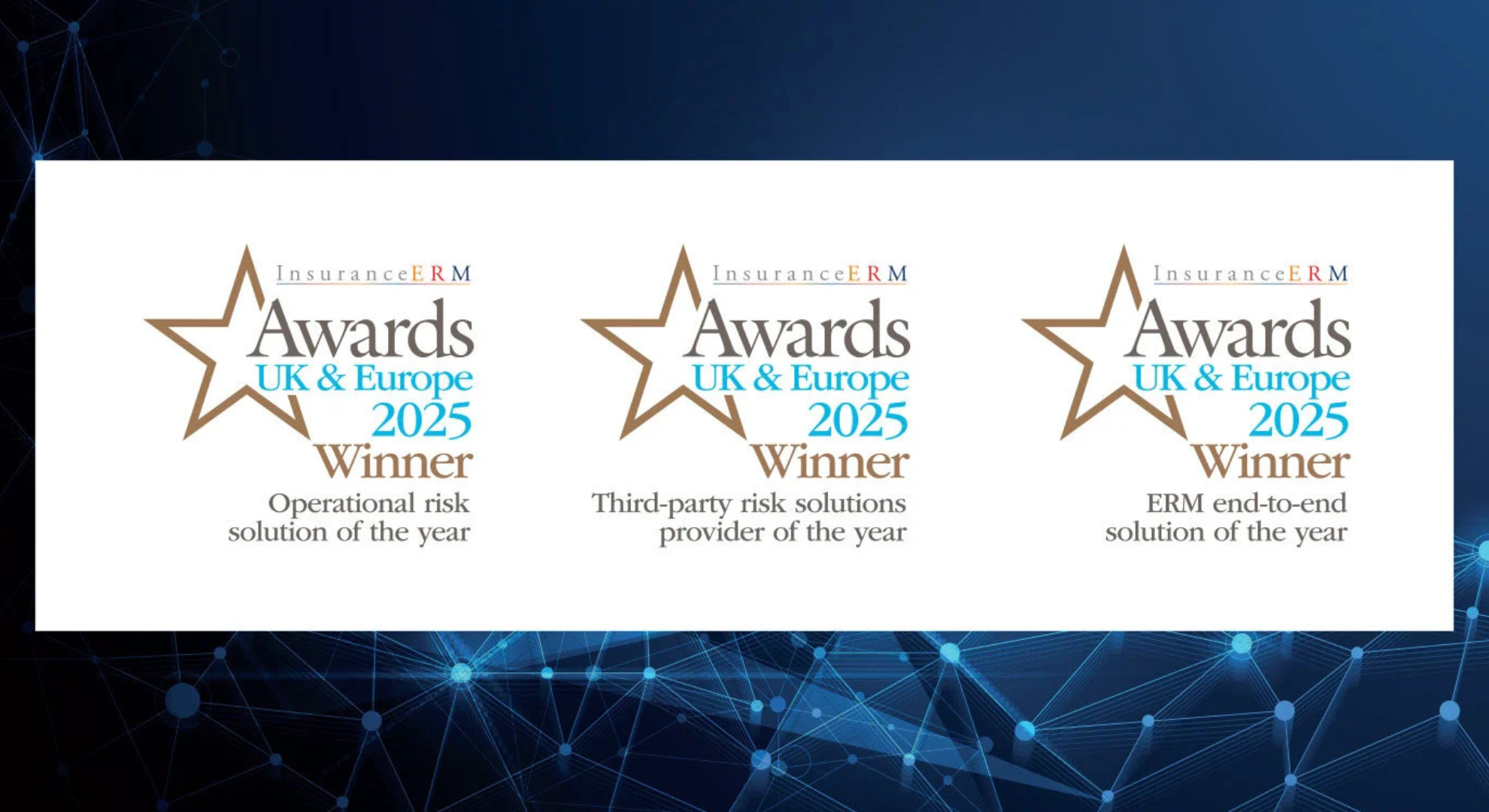
Decision Focus works with organisations across insurance, financial services, and beyond, including Probitas, BMS Group, and Formula 1. In 2026,Decision Focus was named Operational Risk Solution of the Year at the Insurance ERM Americas awards, recognition built on the outcomes its platform delivers for the organisations using it, not on marketing claims.
What the move actually looks like
The prospect of migrating away from a legacy system, particularly one holding years of risk and compliance history, is often the single biggest reason organisations delay a decision they already know is right. A journey-driven implementation approach exists precisely to manage this concern. Rather than a single disruptive cutover, implementation is structured around your organisation's specific priorities and sequenced so that value is delivered in stages, not withheld until one big-bang go-live.
Training through Decision Focus University ensures your team isconfident using the platform, not simply aware that it exists. The goal is amigration your team barely notices operationally, and a platform they areequipped to use fully from day one.
5 signs it might be time to move
1. You maintain a spreadsheet, or several, that only a handful of people fully understand
2. Producing a board or regulatory report takes days of manual reconciliation rather than minutes
3. A new regulation means a development request, not a configuration change
4. Your risk, compliance, andaudit teams cannot see each other's data without asking for an export
5. You are relying on institutional memory, rather than your system, to explain why a record looks the way it does
If any of these sound familiar, the cost of your current approach is already being paid. The only open question is whether it continues to be paid indefinitely, or whether it is redirected towards a platform built to remove it.
The question is no longer whether
Every additional month spent inside a legacy tool or a fragile spreadsheet process is a month of manual reconciliation, avoidable risk, and assurance work that depends on one person remembering how things are supposed to work. That cost rarely appears on an invoice, but it is real, and it compounds.
The organisations moving to Decision Focus are not chasing novelty. They are replacing fragmented, manual, and rigid systems with a single no-code platform built specifically for GRC, with AI embedded where it adds genuine value and governance built in from the outset.
The question worth asking is no longer whether your current tools can keep working. It is what your team could achieve if they were no longer spending their time working around them.
.jpg)