
Enterprise Risk Management Software
Award-winning ERM that protects your organisation
Go beyond static snapshots with a dynamic risk engine that grows with your business.
Trusted to deliver by industry leaders













We migrated our Risk Management framework straight into Decision Focus globally within one quarter. The speed of the implementation was impressive, and Decision Focus has been a pleasure to work with.
Peteris Tora
Supply Chain Planner, Novo Nordisk
A custom solution, ready in weeks
Fully integrated, built to scale with your business, and ready to use in weeks, not months.
Configurability, not complexity
Delivering business benefits

Single source of truth for all your risk
A seamlessly connected GRC platform brings all ERM data together in one place.

Drive productivity with intelligent automation
Automate tasks and connect data to boost efficiency across your organisation.

Never outgrow your tools
Don’t let growth lead to complexity. Our truly agile platform adapts and scales with you.

Embed risk culture across your organisation
Effectively engage stakeholders, make data-backed decisions and raise the profile of risk across your organisation.

See your data in a new light
Make your data work for you. Live data and real-time reporting support evidence-based decision making.

Easy to learn, even easier to use
Intuitive UX, role-based access and @notifications makes driving adoption easy for all users.
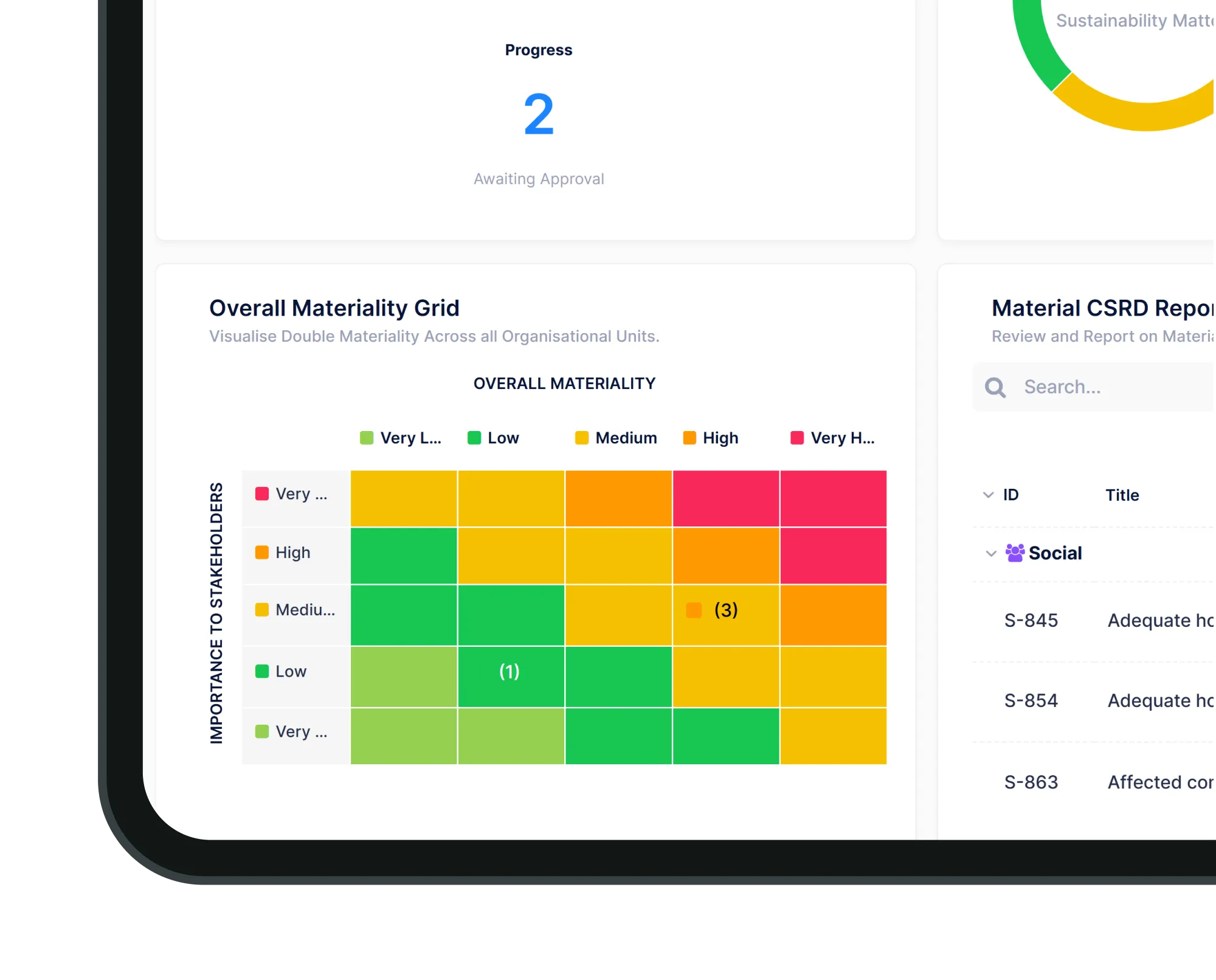
ERM workflows
1. Risk & control identification
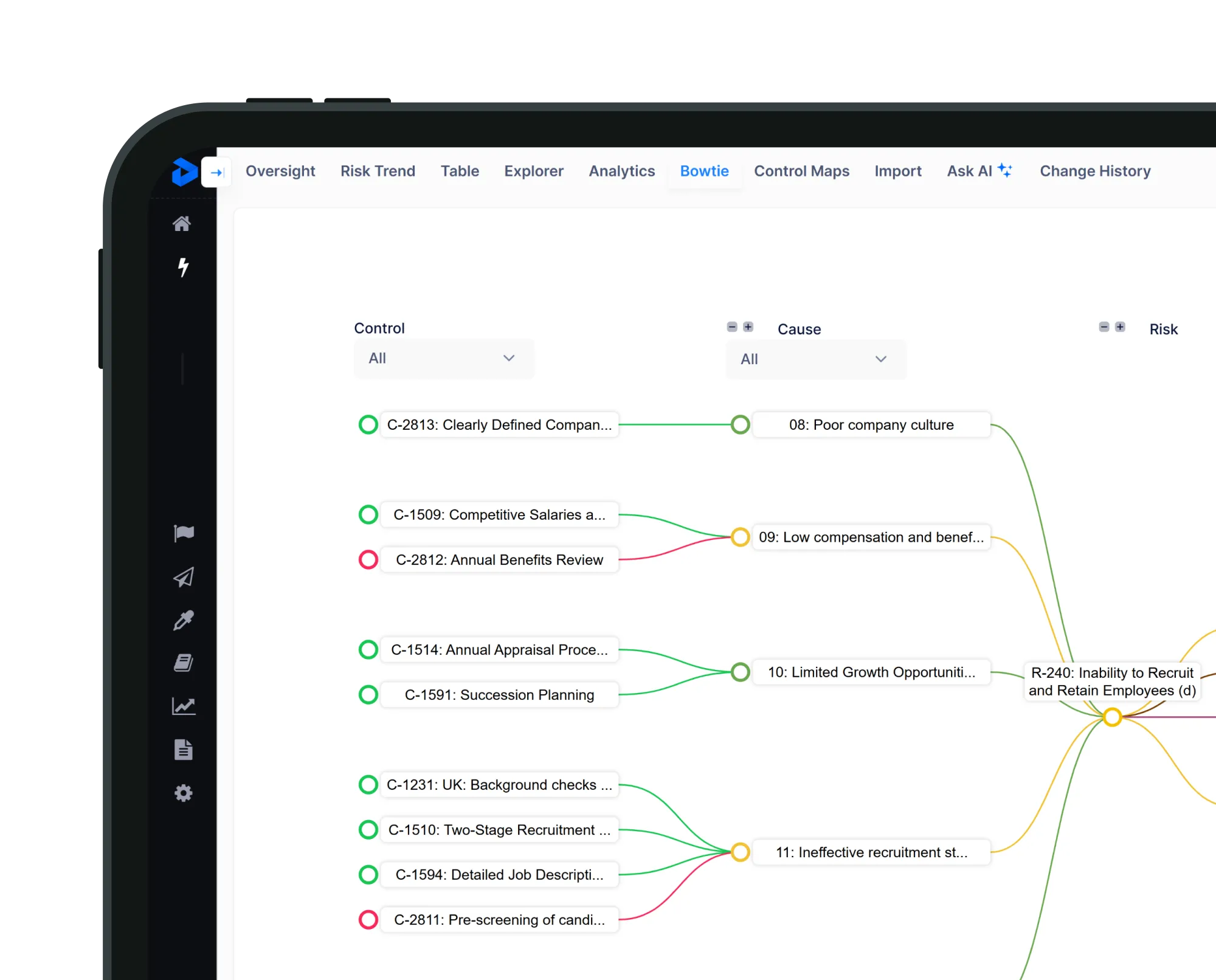
- Map, record and categorise risks and controls with hierarchies that reflect your entity, location, and organisational structure
- Risk owners can propose new risks and controls for risk team reviewal
- Link your risks, controls, processes, systems and testing, with complete audit trails for all changes
2. Risk management & monitoring
- Define your risk appetite and map it directly to risks
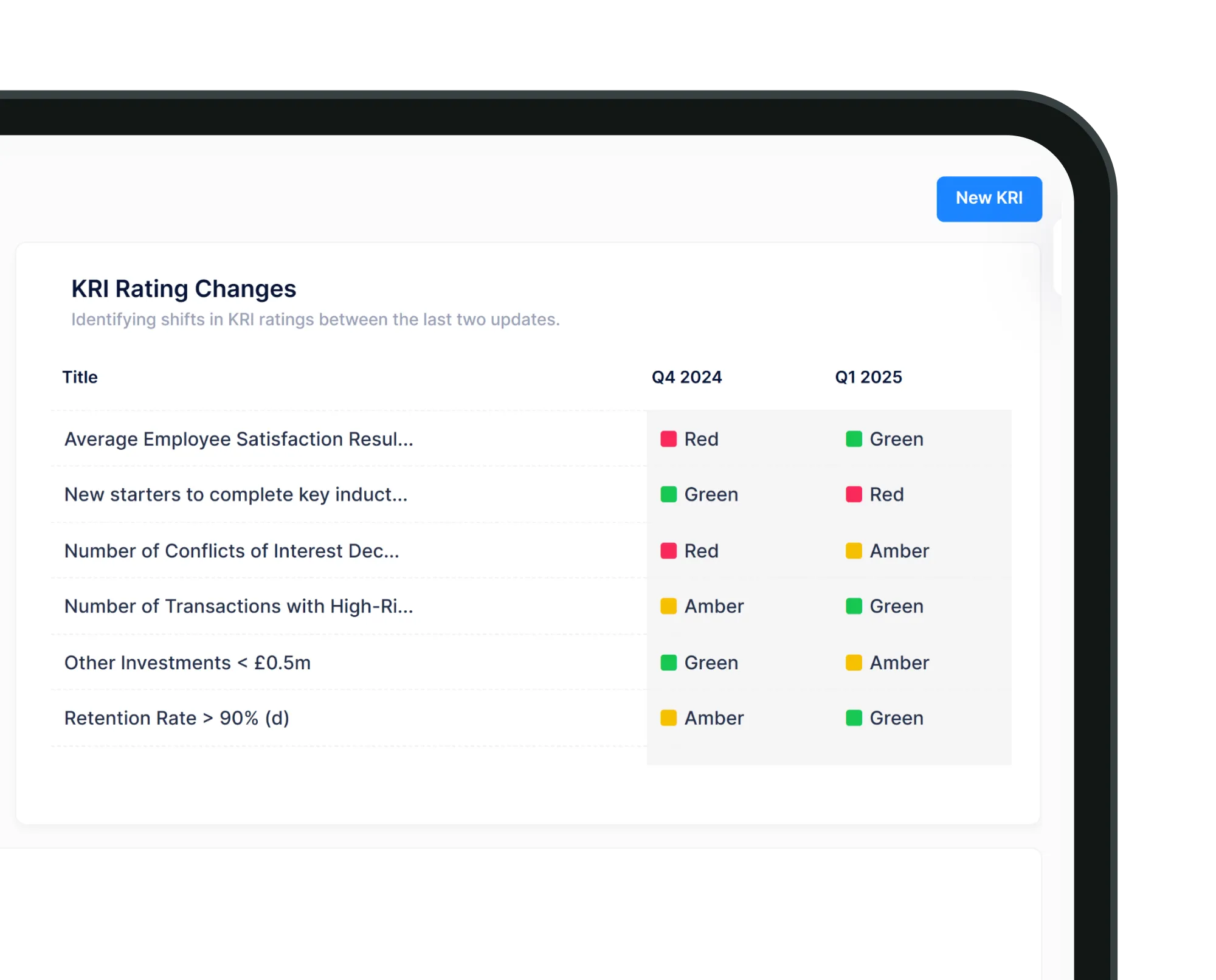
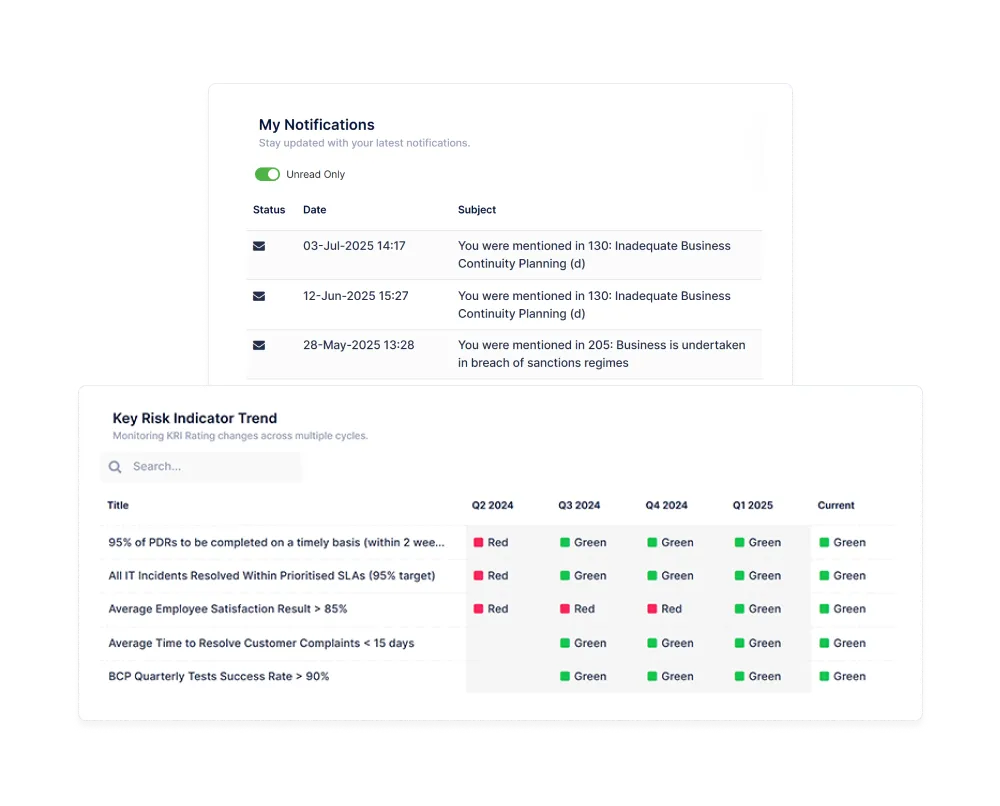
- Capture Key Risk Indicators (KRIs) with early warning and target thresholds
- Two-way links between risks and controls enables a connected GRC approach, benefitting Risk, Compliance & Audit modules
3. Risk events & actions
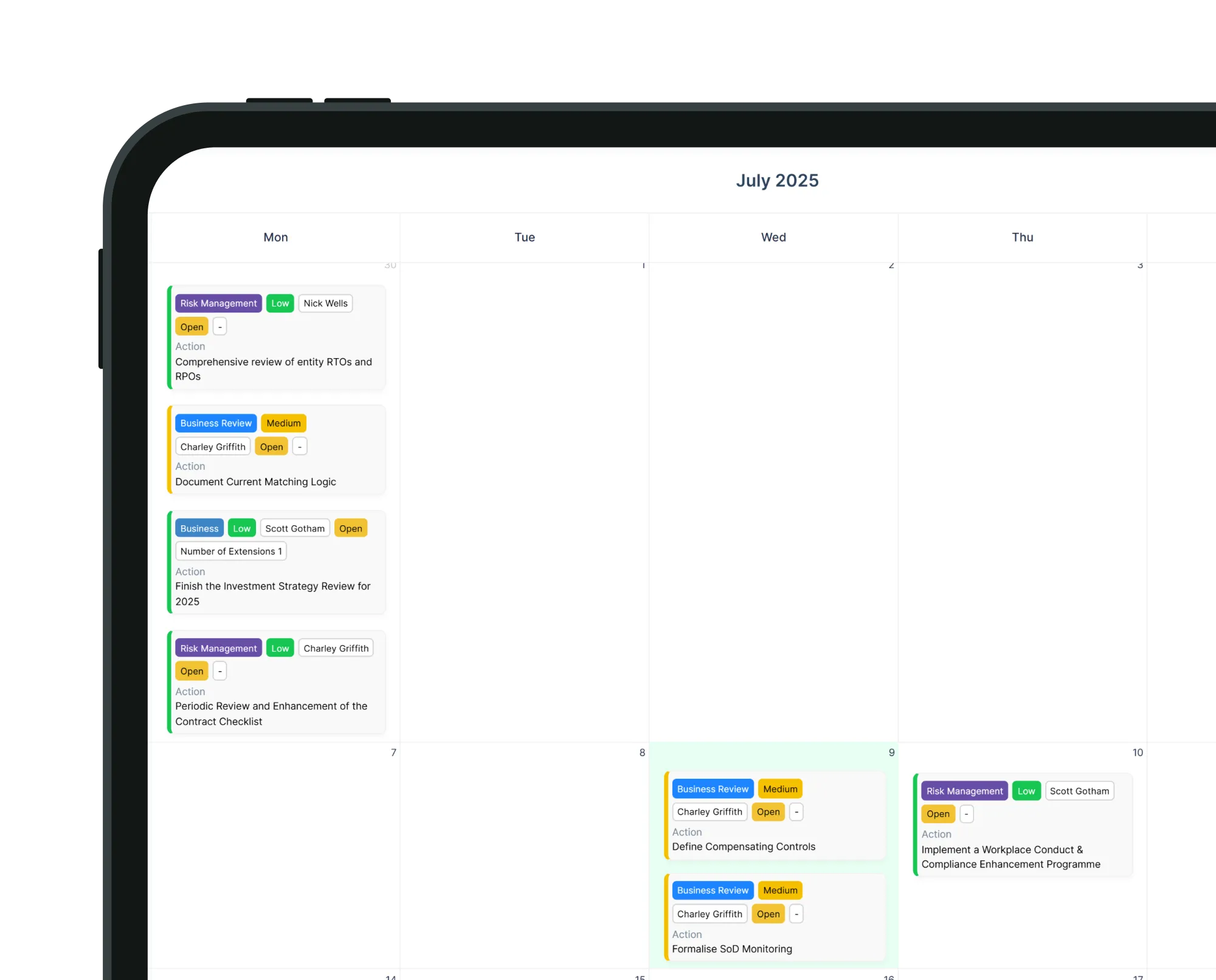
- Record all risk events with root cause analysis and regulatory implications, then allocate related actions
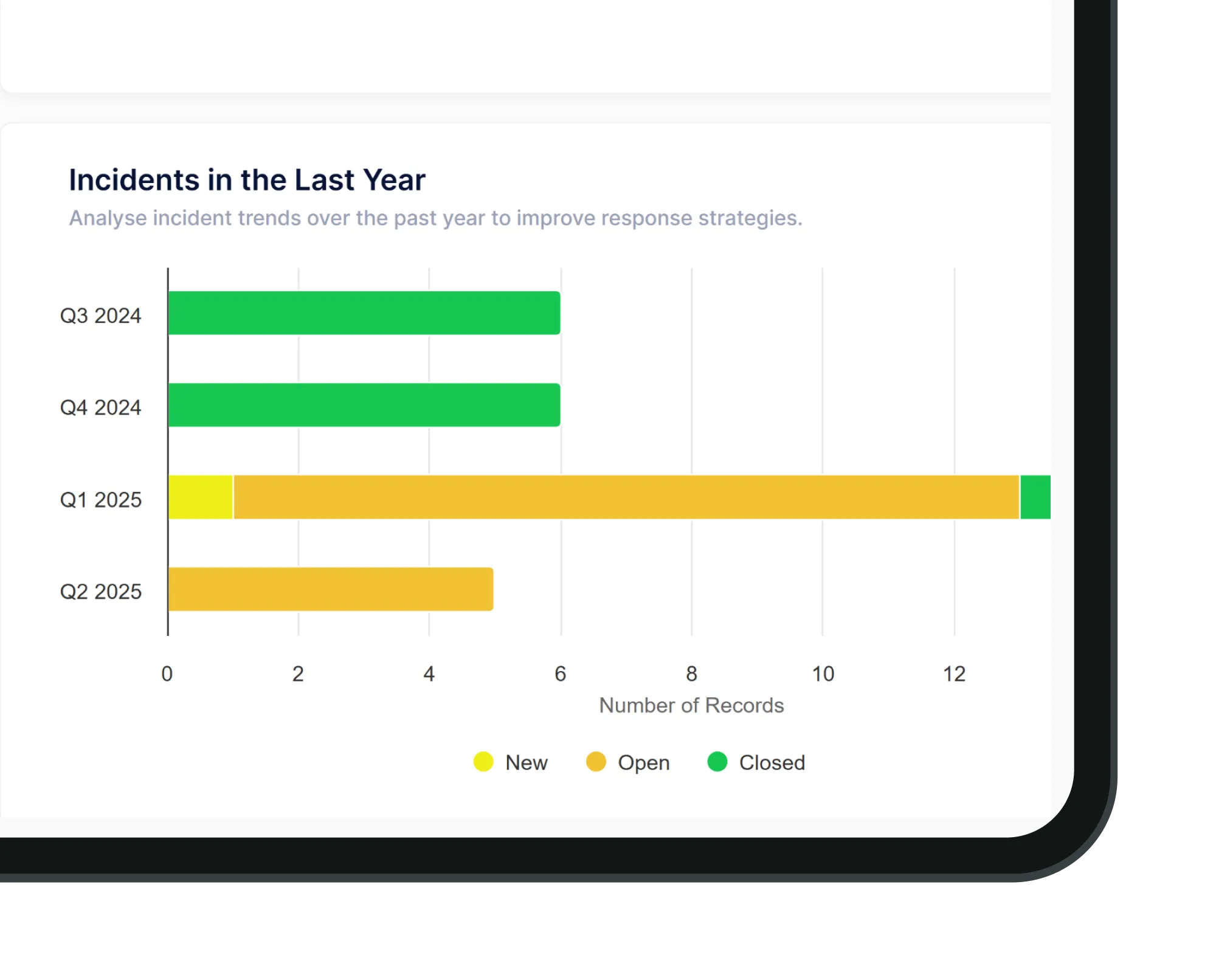
- Track remedial actions with intuitive data visualisations. Customise parameters with just one-click
- Targeted @mentions, notifications and reminders keep processes and actions on-track
4. Risk reporting
- Automatically generate customisable risk committee reports and ‘risk on a page’ documents with white-label branding
- Establish a single version of the truth. Store, analyse and export risk and control matrices within the platform, where they feed straight into our audit management software.
- Easily build custom dashboards to visualise and contextualise risks, controls, actions and more in seconds
Featured Brochure
Enterprise Risk Management solution brochure
Decision Focus' Enterprise Risk Management (ERM) module provides the understanding and oversight you need for more effective risk-taking, mitigation and the ability to act on opportunities.
Get all the details on our single connected platform and learn how we provide 360° visibility of risks and controls, enterprise-wide, plus the real-time data insights necessary to focus thinking and inform risk-based decision making. Deep dive into the Decision Focus platform and see how you can equip your teams with all the tools they need to prioritise effectively, enhance resilience and respond the right way in even the most complex environments.
One unified platform
Build your perfect GRC solution
Our agile no-code platform adapts to your organisation, so you can pick and choose the solutions you need.
Related solutions
Third-Party Risk
Map, monitor and mitigate third-party risk in real time to build resilience across your extended enterprise.
Read more

Operational Resilience
Defy disruption and safeguard critical operations to build resilience into your organisation.
Read more
Information Security
Build bulletproof InfoSec and deliver ongoing compliance with global IT regulations.
Read more
Enterprise Risk Management Software FAQ
Frequently Asked Questions
What is risk management software?
Risk management software is a system for recording, assessing and monitoring the risks an organisation faces, in place of spreadsheets and email. It keeps every risk in one register with an owner, a score and the controls that reduce it, so the risk picture is current and the same for everyone who uses it.
Enterprise risk management (ERM) software applies that across the whole organisation, so operational, financial, strategic and compliance risks sit in one framework and can be reported to the board together.
What does enterprise risk management software do?
Enterprise risk management software is a single system for identifying, assessing, monitoring and reporting risk across a whole organisation rather than in separate departmental spreadsheets. It holds the risk register, links every risk to the controls that mitigate it and the person accountable for it, tracks Key Risk Indicators against early warning and target thresholds, and routes assessments, risk events and remedial actions through defined workflows.
Reports are generated from that live data, so a board pack reflects the position today rather than the last committee cycle. Every change is time-stamped and attributable, which is what turns a register into audit evidence.
What features should risk management software have?
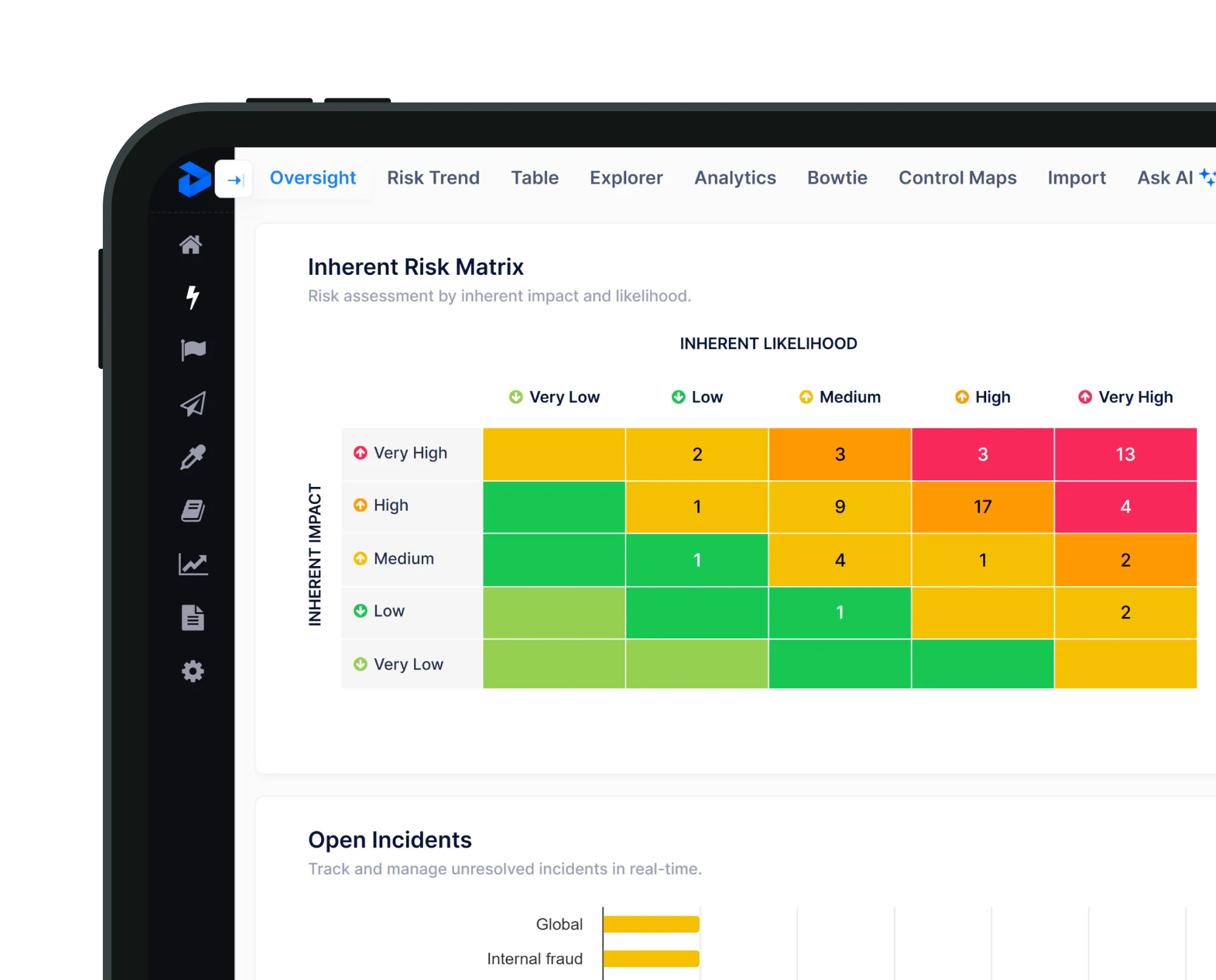
At minimum: a central risk register; risk scoring by likelihood and impact, showing both inherent and residual risk; clear ownership of every risk and control; and workflows with alerts that move assessments, risk events and actions through review.
On top of that, look for Key Risk Indicators with early warning thresholds, dashboards and heat maps that show where exposure sits, a full audit trail of every change, and reporting that produces board packs from live data rather than rebuilt spreadsheets.
What is Enterprise Risk Management (ERM)?
Enterprise Risk Management (ERM) is a structured approach to identifying, assessing, managing and monitoring risk across every part of an organisation, rather than in isolated pockets. Where traditional risk management treats operational, financial, strategic and compliance risk as separate disciplines, ERM connects them into a single framework so leadership can see how exposures interact and where they aggregate.
In practice that means mapping risks and controls against your entity, location and organisational structure, assigning clear ownership, and maintaining a live picture rather than a quarterly snapshot. The Decision Focus ERM module centralises this in one place, linking risks, controls, processes, systems and testing with complete audit trails for every change.
What is the difference between ERM software and a GRC platform?
ERM software manages one discipline: risk across the enterprise. A GRC platform covers governance, risk and compliance together, so a single control can mitigate a risk, evidence a regulatory obligation and be tested by internal audit without being recorded three times in three systems.
The practical difference is whether your risk data has anywhere to go. Standalone ERM tools produce a good risk register that compliance and audit teams then rebuild in their own tools. Decision Focus runs ERM as a module on a connected GRC platform, with two-way links between risks and controls, so the same data serves the Compliance and Audit modules without being maintained twice.
What is a risk register?
A risk register is the central record of every risk an organisation has identified, with its cause, its owner, its inherent and residual scores, the controls applied to it and the actions in progress to reduce it. It is the core artefact of enterprise risk management: board reports, committee packs and regulatory submissions are all built from it.
A register kept in a spreadsheet goes stale between review cycles and carries no evidence that a control was ever tested. Held in software it stays live, each entry links to its controls, indicators and risk events, and every edit is logged with a full audit trail.
Which standards and regulations does enterprise risk management software help you evidence?
The two reference frameworks for ERM are ISO 31000:2018 and COSO's 2017 framework, Enterprise Risk Management - Integrating with Strategy and Performance, which sets out five components and twenty principles. Neither is certifiable: you cannot be audited against ISO 31000 the way you can against ISO 27001, so what counts is being able to show that your framework is applied consistently and evidenced.
That evidence - the register, the control testing records and the audit trail - is what you produce for a UK Corporate Governance Code Provision 29 material controls declaration, which applies to reporting periods beginning on or after 1 January 2026, for a Solvency II ORSA, or for an internal audit. Named regimes carrying their own reporting obligations, such as DORA, SOX, ISO 27001 and GDPR, are handled by dedicated Decision Focus modules drawing on the same risks and controls.
How long does it take to implement enterprise risk management software?
It depends far more on the state of your risk framework than on the software. Where the framework already exists and the register is reasonably clean, a no-code platform is configured rather than developed, and go-live is measured in weeks rather than months.
The work that usually sets the timeline is on your side: agreeing the risk taxonomy, the scoring scales, the appetite statements and who owns what, before anything is migrated. Novo Nordisk moved its risk management framework into Decision Focus globally within a single quarter.
How does the Decision Focus ERM solution improve risk oversight?
Oversight fails when data is stale, scattered or manually compiled. The ERM module addresses each of those.
Live dashboards replace static reporting, so the risk picture reflects today rather than the last committee cycle. Configurable workflows route risk and control identification through the right owners, with risk owners able to propose new risks and controls for the risk team to review. Targeted @mentions, notifications and reminders keep remedial actions moving.
Reporting is automated. Customisable risk committee reports and "risk on a page" documents generate with white-label branding, and risk and control matrices can be stored, analysed and exported within the platform. Two-way links between risks and controls mean the same data also serves the Compliance and Audit modules rather than being maintained twice.
Can the ERM module support custom risk appetite frameworks?
Yes. Rather than forcing your organisation into a fixed methodology, the ERM module places your own risk framework at its core.
You define your risk appetite and map it directly to individual risks, so tolerance is measured against the exposures it actually governs. Key Risk Indicators can be captured with early warning and target thresholds, giving you a signal before a limit is breached rather than after. Actions and remediation connect back to the risks and controls they address, so decisions are made with full context of where you sit against appetite.
Because the platform is no-code, appetite frameworks can be adjusted as the business changes without waiting on a development cycle. Novo Nordisk migrated its risk management framework into Decision Focus globally within a single quarter.
Does the ERM software integrate with compliance and ESG requirements?
Yes. ESG and regulatory compliance are managed alongside traditional risk metrics rather than in a parallel system.
The module includes the tools to manage environmental, social and corporate governance obligations. Risk events are recorded with root cause analysis and regulatory implications attached, so reporting obligations are captured at the point the event is logged rather than reconstructed later.
Because Decision Focus is a single connected GRC platform, ERM data feeds the Compliance and Audit modules through two-way links between risks and controls. Secure role-based access extends to external parties such as auditors, without exposing the wider dataset.
Any questions?
Or just curious to see a demo
The Decision Focus team are here to answer your questions.